An excimer laser is an ultraviolet (UV) laser that uses a compound of noble gases, halogen, etc. as its laser medium, typical examples being ArF excimer lasers (wavelength of 193 nm), KrF excimer lasers (wavelength of 248 nm), XeCl excimer lasers (wavelength of 308 nm), and XeF excimer lasers (wavelength of 351 nm).
lasers where optical amplification occurs in a plasma containing excited dimers (or other molecules) with an anti-binding electronic ground state
Different types of excimer lasers typically emit at wavelengths between 157 and 351 nm:
F2 (fluorine) 157 nm
ArF (argon fluoride) 193 nm
KrF (krypton fluoride) 248 nm
XeBr (xenon bromide) 282 nm
XeCl (xenon chloride) 308 nm
XeF (xenon fluoride) 351 nm
Commonly used excimer lasers have output wavelengths of 351nm, 308nm, 248nm, 193nm, 157nm. The excimer laser has a high single photon energy, from 3.5eV (351nm) to 7.9eV (157nm), which can effectively break the covalent bonds in the material organization. Unlike CO2 and YAG lasers, excimer lasers perform photo ablation of materials through laser-induced chemical processes, avoiding the thermal effects of infrared laser processing and the destruction of surrounding tissues during laser biological tissue removal. The characteristics of “cold processing”. Excimer lasers have a wide range of applications in industry, medical, scientific research and other fields.

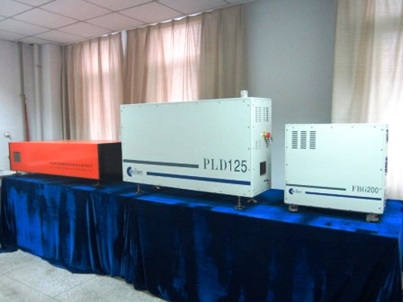
Excimer laser Prices at the year of 2021
The big LASIK laser manufacturers in the United States charge well over $100,000 for an Excimer laser. The typical range is between $150,000 at the low end to nearly $300,000 at the high end.
Applications of Excimer Lasers
The short wavelengths in the ultraviolet spectral region make possible a number of applications:
the generation of very fine patterns with photolithographic methods (microlithography), for example in semiconductor chip production
laser material processing with laser ablation or laser cutting (e.g. on polymers), exploiting the very short absorption lengths of the order of a few micrometers in many materials, so that a moderate pulse fluence of a few joules per square centimeter is sufficient for ablation
pulsed laser deposition
laser marking and microstructuring of glasses and plastics
laser annealing, e.g. in display fabrication
fabrication of fiber Bragg gratings
ophthalmology (eye surgery), particularly for vision correction by corneal reshaping with ArF lasers at 193 nm; common methods are laser in-situ keratomileusis (LASIK) and photorefractive keratectomy (PRK)
psoriasis treatment with XeCl lasers at 308 nm
pumping other lasers, e.g. certain dye lasers
drivers for nuclear fusion
The Broadest Portfolio of Excimer Lasers from coherent
ExciStar tabletop UV excimer lasers are designed for delicate tasks including cornea ablation, prescription lens marking, and optical sensor manufacturing. 193 nm or 248 nm – Precision marking and ablation.
IndyStar lasers are rugged high duty cycle UV excimer lasers designed for fast pulse applications like ink jet nozzle drilling, metrology and optics testing. 193 nm and 248 nm – Lithography development, mask and optics testing, microprocessing.
COMPex UV lasers deliver hundreds of millijoules of pulse energy with high pulse-to-pulse stability and excellent beam uniformity for demanding applications. Supports Thin Film Processing – Wafer Processing, Pulsed Laser Deposition.
LEAP UV excimer lasers offer high energy, high precision processing with our combination of high duty-cycle output, reliability, and low cost of ownership. Versatile – Select from 193 nm, 248 nm and 308 nm models for pulsed laser deposition, microstructuring or display processing.
LAMBDA SX are industrial UV excimer lasers for the production floor, with stable high energy pulses supporting large-area UV processing with beam stability. High Pulse Rate – Three-shift mass production with up to 600 Hz.
VYPER kilowatt to multi-kilowatt UV excimer laser platforms enable the highest throughput for high-volume display production. Unmatched Energy Stability – Supports OLED and MicroLED backplane processing.