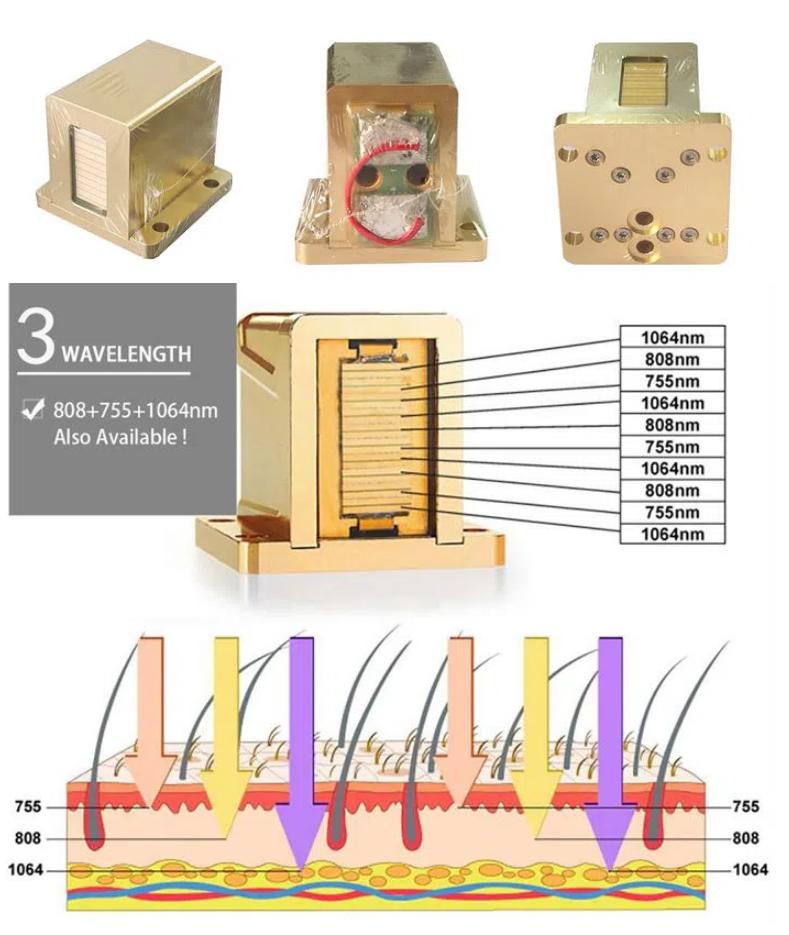
808nm wavelength
An 808nm wavelength can help red blood cells do a better job of carrying oxygen from the lungs to body cells. Improving the delivery of oxygen can help regenerate damaged muscle and tendon tissue. A specific protein, known as hemoglobin, binds to oxygen. Exposure to 810nm wavelength causes the rapid activation of this binding process in a way that speeds healing and recovery.
810nm wavelength
An 810nm wavelength can help red blood cells do a better job of carrying oxygen from the lungs to body cells. Improving the delivery of oxygen can help regenerate damaged muscle and tendon tissue. A specific protein, known as hemoglobin, binds to oxygen. Exposure to 810nm wavelength causes the rapid activation of this binding process in a way that speeds healing and recovery.
Research shows that treating tissue with this wavelength of light therapy also promotes the healthy distribution of calcium, both in the liquid inside the cell and in the cell’s mitochondria. This calcium plays an important role in the cell’s activity, communication, and lifecycle.
980nm wavelength
The 980nm wavelength also affects the distribution of calcium by decreasing the amount of calcium within the mitochondria and increasing the calcium within the liquid of the cell. Stimulating cells with the 980nm wavelength laser therapy helps ease pain, stimulate circulation, and enhance muscle relaxation.
1064nm wavelength
At 1064nm, this light wavelength penetrates into deeper tissue than either 810nm or 980nm wavelengths. This means the laser light activates metabolic processes in tissues unreachable by other light wavelengths.
The 1064nm wavelength provides more penetration into deep tissue. Studies show that at 1064nm, there is less dispersion in the biological tissue because there is a decreased amount of melanin absorption. That deep penetration means activation of the metabolic process in deeper tissue.