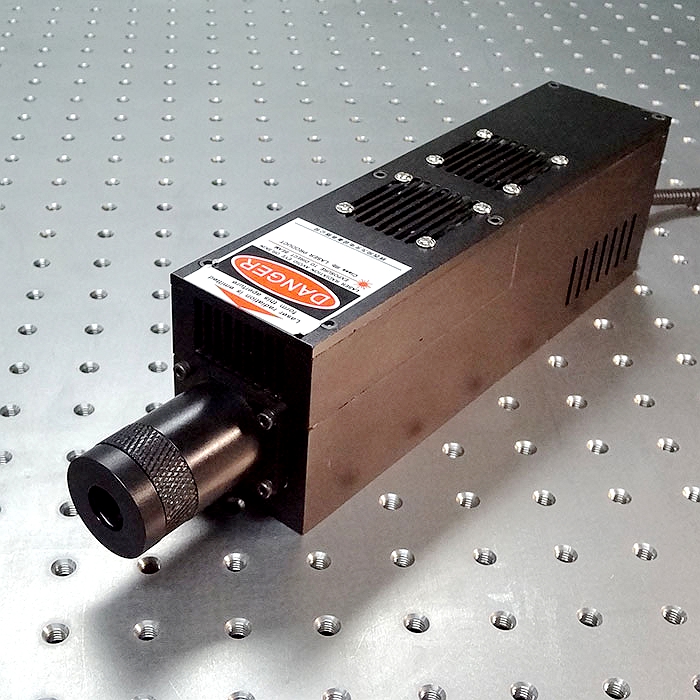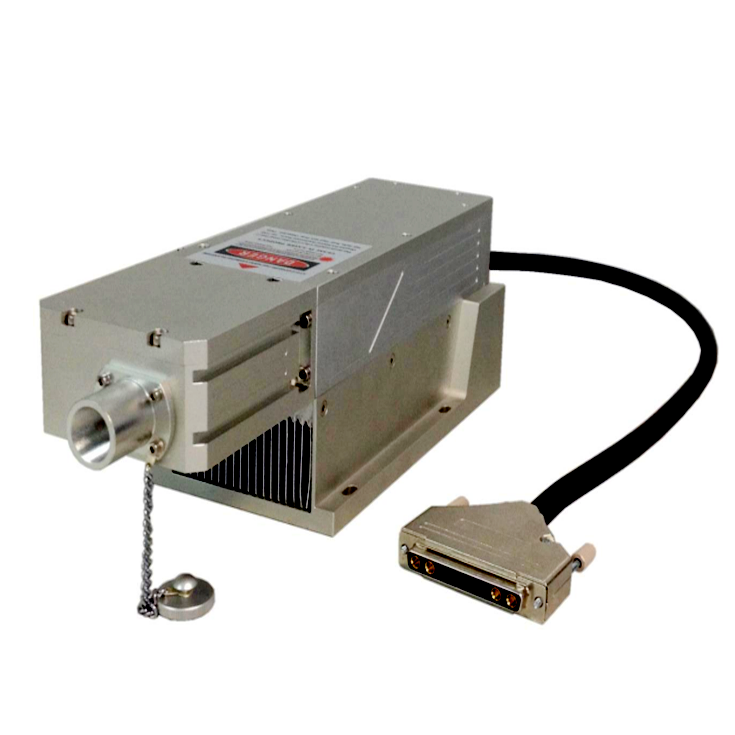
343 nm laser is an ultraviolet UV solid state laser typically generated by frequency-tripling (third-harmonic generation) an infrared 1030 nm Yb:YAG source. Operating at short femtosecond pulse durations, it is highly valued in micromachining, spectroscopy, and medical diagnostics due to its high photon energy and minimal thermal impact.

Femtosecond Lasers: Systems like the Light Conversion CARBIDE-CB3-UV deliver 500 fs pulses, while the EKSPLA FemtoLux offers up to 10 W of output power, both utilized for high-precision microfabrication.
Frequency-tripling (Third-Harmonic Generation) a 1030 nm Yb:YAG laser to 343 nm is a cascaded nonlinear process. It involves first generating the second harmonic at 515 nm (frequency doubling), and then utilizing sum-frequency generation (SFG) to mix the residual 1030 nm fundamental with the 515 nm light.
41 W, 343 nm UV femtosecond laser based on rod-type PCF and LBO crystals
demonstrated a high-power ultraviolet (UV) femtosecond laser based on an all-fiber photonic crystal fiber (PCF) laser. By combining a short, large-mode-area (LMA), high-gain silica PCF with a large-core rod-type PCF, the B-integral accumulation of the system is reduced. This ultimately enabled the generation of UV laser output at a wavelength of 343 nm, with a repetition rate of 1 MHz, pulse duration of 309 fs, average power of 41 W, and harmonic conversion efficiency of 26%. The beam quality of the UV laser is near-diffraction-limited with M2 factors of Mx2=1.11, My2=1.12. This UV femtosecond laser source has promising applications in fields such as semiconductor wafer dicing and biomedical imaging.